Attorney Spotlight: Kurt Zaner, Denver Trial Lawyer
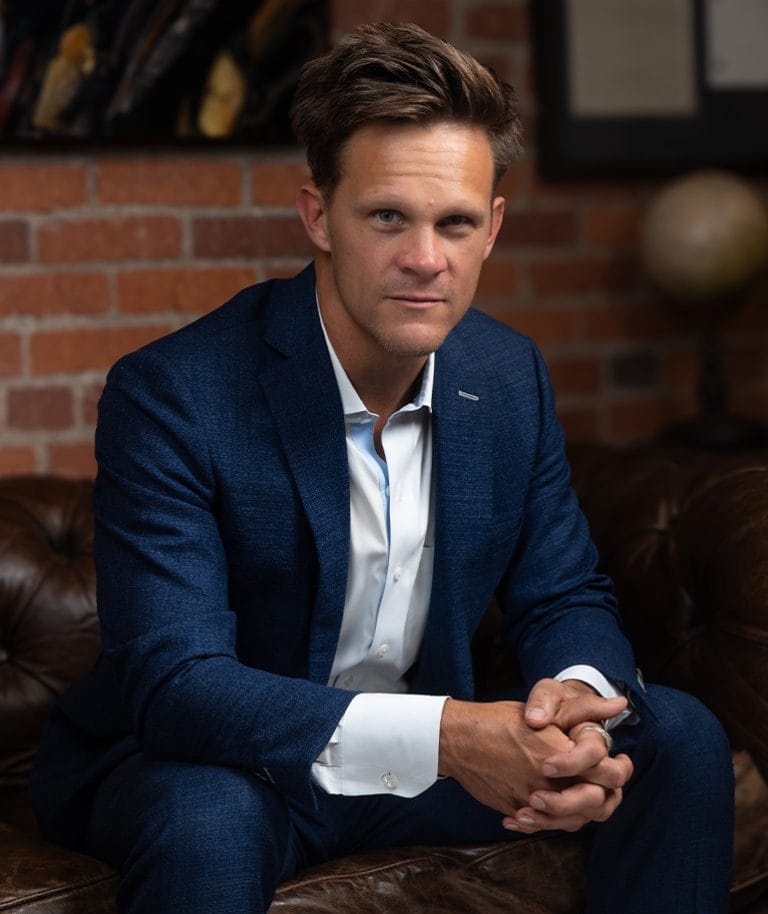 Before he was trying eight-figure injury cases to Colorado juries, Kurt Zaner was learning a different trade. He studied acting in college and again in Los Angeles, and took his undergraduate degree in history with a focus on the Roman empire. He arrived at the University of Florida’s law school with a working knowledge of classical rhetoric and a stage actor’s training in how to hold a room, which is not the standard preparation for a plaintiff’s practice.
Zaner co-founded his Denver firm in 2012, and it took its current name, Zaner Law, in 2025. In the two decades since he finished the clerkship that followed law school, he has tried cases to some of the largest personal injury awards in Colorado history, among them a $30 million federal verdict in 2024 and a $16 million premises liability verdict that the state Court of Appeals affirmed in an opinion still cited today. He has also become a fixture on the national trial-teaching circuit, where the subject he is asked to lecture on most often is, in effect, stagecraft.
Kurt Zaner has dedicated his legal career to representing folks against the modern-day Goliaths.
— Zaner Law, firm bio
The practice runs on catastrophic injury cases against corporate defendants: oil and gas operators, electrical contractors, trucking companies and insurers. The firm’s results page lists the verdicts, though in several of the largest the sum the client actually collected came in considerably lower, cut down by Colorado’s statutory caps on damages.
From the Stage to the Courtroom
Zaner took both of his degrees at the University of Florida, finishing his B.A. cum laude and winning election to Phi Beta Kappa before staying on for law school. There he graduated magna cum laude, was inducted into Order of the Coif and finished in the top seven percent of his class, all while sitting on the Florida Law Review board and serving as vice president of Florida Blue Key. He left with the ABA and ALI Best Graduate Award and an outstanding graduate award from the school’s trial team.
He then clerked for United States District Judge Kenneth A. Marra in the Southern District of Florida, an assignment he credits with teaching him “the art of persuasive advocacy both through legal writing and courtroom theatrics.” Most clerkship alumni describe that year in terms of the writing alone; Zaner puts the writing and the performing in the same sentence.
As a trained stage actor, Kurt credits much of his trial success to his theatrical training in college and in Los Angeles prior to law school.
— Zaner Law, firm bio
He has not entirely left the stage, having played Reverend Parris in a community production of The Crucible and turned up since at Vintage Theatre in Aurora. What follows him into a courtroom is less the performing than the craft underneath it: how a narrative gets built, where an audience’s attention actually travels, and what a juror still remembers after two weeks of testimony.
A Record Built at Trial, and a Statute That Cut It in Half
Zaner’s largest verdict came in February 2024, when a federal jury in the District of Colorado awarded $30 million to Steven Straughen, an oil and gas worker who was standing on top of a frac tank when it exploded at a Weld County rig site in December 2019. Straughen broke his pelvis, hip, back, knee, ankle and most of his ribs, and lost his lower leg. Both CBS Colorado and Denver7 covered the verdict.
He will not collect most of it, because Colorado caps non-economic damages, and within weeks the award had been reduced by roughly $14 million by operation of statute, a cut CBS Colorado reported in a follow-up and one Zaner has criticized publicly. The reduction landed in the middle of Colorado’s long argument over damages caps, arriving the same month a ballot measure on the subject was being drafted.
I think this was a big case for the oil and gas industry, and it helps send a message to make sure that the products you’re delivering are safe. With every trial, when you hold a company accountable, it can help change practices to make the world safer, that’s why I do what I do.
— Kurt Zaner, to CBS Colorado
The case that changed Colorado law is Warembourg v. Excel Electric, Inc., brought against an electrical contractor with no connection to the similarly named utility. A Boulder County jury returned roughly $16 million in October 2018, reported at the time as the largest premises liability verdict in state history, for a father of three who suffered severe nerve damage and developed complex regional pain syndrome after a temporary electrical box exploded at his worksite. Evidence had gone missing before trial, a thread Fox31’s Problem Solvers pulled on at the time and The Denver Post also covered.
The Colorado Court of Appeals affirmed unanimously in 2020 COA 103, 471 P.3d 1213 (Colo. App. 2020), holding that a trial court may instruct a jury to draw an adverse inference from evidence a party has destroyed. The Colorado Supreme Court later relied on that holding in Keaten v. Terra Management Group, and both opinions now appear in the commentary to the state’s civil jury instructions. The firm reports the matter resolved for $15.7 million after the appeal.
A Denver jury awarded $8.4 million in a second electrocution case involving complex regional pain syndrome, which the firm reports collecting at $10.6 million with interest. In a trucking case, Miller v. Mile Hi Foods, tried in federal court in October 2022, the firm puts the total at $4.3 million, and the docket shows the non-economic portion trimmed by statute from $700,000 to $613,760.
In 2014 a Denver jury returned a verdict reported at $2.5 million for the family of Abdul Alhilo, a 25-year-old killed on his motorcycle by a hit-and-run driver. Daniel Kliem surrendered two days after the collision, by which point he could no longer be tested for intoxication, and he eventually pleaded guilty to leaving the scene. Zaner’s team built the intoxication case circumstantially, out of two prior alcohol-related convictions and the open containers police found in Kliem’s car, and the jury went on to assign Alhilo forty-five percent of the fault, which brought the judgment well below the figure in the headlines.
Zaner defended what remained of it on appeal, and in Alhilo v. Kliem, 2016 COA 142, 412 P.3d 902 (Colo. App. 2016), the Court of Appeals upheld the admission of Kliem’s prior convictions and his flight from the scene while holding that Colorado’s wrongful death cap applies only after comparative fault has been apportioned, a reading that favors plaintiffs. The Colorado Supreme Court declined to take the case up the following year.
None of it was solo work: Zaner’s partner Sarah T. McEahern appears as co-counsel on each of those verdicts, alongside outside trial counsel in the larger matters.
Zaner has been listed in Best Lawyers in America for plaintiffs’ personal injury litigation since 2021 and selected to Super Lawyers every year since 2016, following two years as a Rising Star. He holds a 10.0 rating on Avvo as of this writing and appears on the National Trial Lawyers Top 100. 5280 has named him a Top Lawyer in multiple years, and the Colorado Trial Lawyers Association named him its New Trial Lawyer of the Year in 2019.
Verdict and settlement figures described here are gross awards before statutory reductions, comparative-fault allocations, liens, costs and fees unless otherwise noted. Case results depend on the facts and legal posture of each individual matter, and past results do not guarantee or predict a similar outcome in any future case. Awards and ratings reflect the criteria of the issuing organizations, some of which are membership or nomination based.
Teaching the Trial Bar
Zaner was elected national president of the American Association for Justice’s New Lawyers Division in 2016, after terms as the division’s secretary and treasurer, and he has since served on AAJ’s Board of Governors from 2018 to 2020 and again from 2022, including a term on its executive committee. Closer to home he has sat on the Colorado Trial Lawyers Association board and its legislative committee.
The lecture titles give away the method: “Dramatic Techniques in Trial” has taken him to keynote slots for the Idaho Trial Lawyers Association and the Massachusetts Academy of Trial Attorneys and to featured billing at the Michigan Trial Summit and the Louisiana Association for Justice, while for the Wisconsin Association for Justice he keynoted on voir dire instead. “How to Win Your Case in a Page and a Half” has run at AAJ’s winter convention and in Virginia, Louisiana, Ohio and Colorado, and he also teaches opening statements built on the rhetorical tools of Cicero and the Greeks.
He writes in the same register, publishing “Lessons From Cicero” in AAJ’s Trial magazine in 2017 and, in the same magazine, a piece on liability roadblocks in bicycle cases. For Trial Talk he wrote about distracted driving, a subject he also carries into Colorado high schools through the End Distracted Driving campaign.
Step Into the Arena
Zaner also runs Dragon Slaying Lawyers, a listserve where plaintiffs’ trial lawyers trade strategy and case wisdom, free to join and carrying no exclusivity requirement. Its tagline is “Step into the Arena,” and the title attached to the contact address is Head Dragon Slayer.
A community of trial lawyers courageously banding together to serve as champions to our clients, our family, and our friends.
— Dragon Slaying Lawyers
Off the Clock
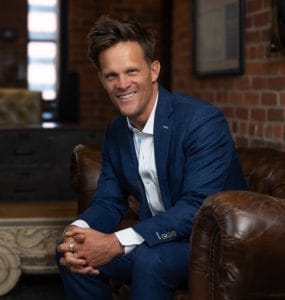 Zaner is married with three young sons. He coaches their teams, and the family trains in Kenpo Karate together, where he gravitates toward the weapons work: bowstaff and spear, a preference he traces without much embarrassment to Oberyn Martell of Game of Thrones and to Kaladin, the spear-wielding protagonist of Brandon Sanderson’s The Way of Kings. For six years he also sat on the board of the Denver Athletic Club as its liaison to the membership committee. Whatever time is left over he spends with his family in the Colorado mountains, where nobody needs persuading of anything.