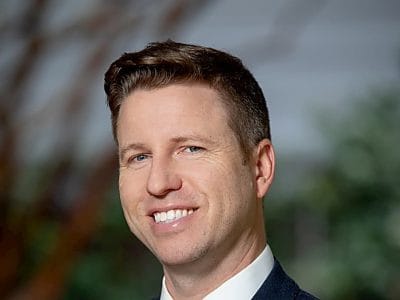
Attorney Spotlight: Ross Jurewitz, San Diego Injury Lawyer
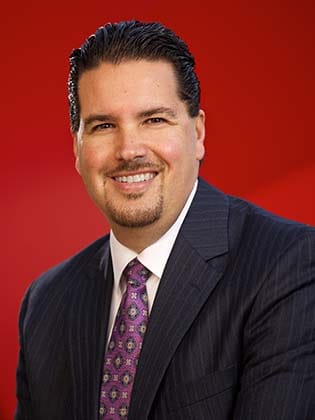 At twenty past six on the morning of January 25, 2013, Ross Jurewitz sat down across from anchor David Davis on KUSI Channel 9 to explain to San Diego why the family of Junior Seau was suing the National Football League. Seau had taken his own life eight months earlier, the National Institutes of Health had since confirmed he was suffering chronic traumatic encephalopathy, and his family had filed suit two days before against the league and the helmet manufacturer Riddell. Jurewitz walked through the allegations, then told viewers something most of them had not heard: Seau’s family was joining at least eighty other lawsuits involving hundreds of players, already consolidated before a single federal judge. He predicted the NFL would move to fold the Seau case in with the rest, that discovery would turn on what the league had known and what it had told its players, and that none of it would resolve in under two years.
He was twelve years into practice by then, six of them running his own firm, which he and his wife Lee had started in 2007 and which still carries his name. That morning turned out to be the beginning of a long second career as the lawyer San Diego stations call when they need someone to explain liability before the seven o’clock hour. Over the next four years he was on KUSI again about illegal street racing, on Fox 5 about a nurse who refused to perform CPR on a woman who then died, on CBS 8 about what a DUI actually costs, and on NBC 7 about the difference between the auto policy people think they have and the one they bought.
It’s too easy in our business, in the personal injury practice, for people to become very cynical and jaded, and for attorneys to look at clients as a means to an end to make money. You always have to remember that the client’s a person with a family, with goals of their own that they want to accomplish, and you can never really lose track of that.
— Ross Jurewitz, in a firm interview
The practice underneath the television work is ordinary injury work in volume: people hit by cars, by motorcycles, by trucks, by products that failed, with an insurance carrier on the other side of every file. The firm operates out of two San Diego offices, one in Carlsbad and one in Tampa, and the phone number it advertises across San Diego radio is 855-GET-ROSS, on stations whose morning hosts know him well enough to pull him into the studio to talk about nothing in particular.
Suing the City Over a Piece of Broken Sidewalk
A recurring theme in the television segments is Jurewitz explaining that the government can be a defendant like anyone else. In March 2017 he went on KGTV to talk about a client badly hurt by hazardous road conditions, and he has been back on ABC 10News more than once on the same subject, including a case a reporter walked him through involving a cyclist and a cracked sidewalk in Carmel Valley. He has also represented a group of condominium owners against the City of San Diego over a drainage system the city had left alone long enough to flood their homes.
None of those are the eight-figure cases, and all of them are the kind a viewer might have standing in their own street. A city that has left a sidewalk broken for years is a defendant most people never think to name.
A Title IX Argument, Then a Practice
Jurewitz grew up toward the law by an indirect route, taking a political science degree at the University of California, San Diego in 1997 with a minor in law and society, then going east to the Washington College of Law at American University. In the year he finished, he published a long argument in his school’s own journal that federal enforcement of Title IX in college athletics was built wrong, and that women’s programs were absorbing the cost of the gap. “Playing at Even Strength” runs from page 283 to page 351 of the 2000 volume, and it is concerned less with whether the statute is just than with who complains, who investigates, and what happens when nobody checks.
California admitted him that December, and he has practiced there without a mark on his record ever since. Seven years later he and Lee went out on their own. He writes for non-lawyers now instead of journals, having produced one book on the mistakes that wreck a California accident claim before anyone calls a lawyer and another for injured motorcyclists, plus a 2013 commentary in The Daily Transcript asking whether corporate legal departments were about to relocate to India.
Every result the firm publishes appears beside the insurance offer that came before it. The largest is $19,150,000, in a case it describes as a tractor-trailer on the 125 crossing every lane of opposing traffic into a car carrying a mother and her adult daughter; the firm sued for both families, and the offer beforehand had been $6,000,000. A motorcyclist who pulled away from a green light into an SUV turning against a red arrow took his case to trial and the jury returned $1,014,299, where the offer had been $425,000. A wrongful death claim for the parents of a woman killed by an amphibious tour bus settled after mediation at $550,000, against $225,000. By the firm’s count it has recovered more than $250 million.
Super Lawyers has picked him every year since 2016, on a process it describes as peer influenced and research driven and limited to the top five percent of attorneys. He carries a 10.0 rating on Avvo as of this writing and its Client’s Choice award in four separate years, a Top 100 listing from a trial lawyers’ membership organization that charges dues, and a 2016 finalist spot for the San Diego Business Journal‘s Most Admired CEO award. Attorney Journal San Diego put him on its cover as attorney of the month.
What He Tells People About Adjusters
On the subject of the other side of a claim, the plain-English delivery he uses on television turns considerably harder. The adjuster who calls a week after a crash is, in his telling, working from a script.
It’s a common tactic amongst insurance adjusters to play buddy-buddy with the driver who their insured injured. They want to be friendly; they want to ingratiate themselves with you; they want to act like they are on your side.
Problem is, the whole thing is an act.
— Ross Jurewitz, in a firm interview
“At no point in time is that insurance adjuster ever your friend or ever looking out for your best interest,” he has said, and the practical advice that follows is unusually specific for a lawyer talking on camera. Photograph the scene, since everyone is carrying a camera anyway. Talk to whoever is standing around, because they will not be findable later. Assume nothing about the driver who apologized, who tends to stop apologizing once he has spoken to his own insurer. On recorded statements he is blunt: “There is absolutely no requirement that you give a recorded statement to an insurance company.”
His account of how a case dies has nothing to do with legal error. “The people who destroy their cases are people who wait far too long before they talk to a lawyer,” he has said, and the advice he gives them at that point is to call somebody, anybody, and take the free consultation before deciding whether to hire.
November 2012
In October 2012, five years into the firm the two of them had built, Lee was diagnosed with bilateral breast cancer. The office put together a team for the Susan G. Komen Race for the Cure inside two weeks, more than fifty people, family and friends and staff, and ran the five kilometers through Balboa Park on November 4 with better than $3,000 raised behind them. She is still his partner in the firm fourteen years later.
Much of the firm’s community work since has stayed close to the injuries it litigates. Teams walked Mission Bay for the San Diego Brain Injury Foundation in 2012 and again in 2013, with the office covering every participant’s entry fee. It donated $1,250 to the National City Police Department so officers could hand out five hundred safety memo boards while teaching fourth graders how to handle bullies. On October 24, 2013, Jurewitz spent a morning with sixty seniors at Point Loma High School on the subject of texting and driving, with a wrecked car towed onto the campus for the occasion; all sixty signed a pledge before he left.
The charitable calendar is not uniformly solemn, and in 2014 the firm entered a spicy guacamole with queso in the Guacamole Bowl, collected five hundred votes, and helped raise close to $12,000 for a nonprofit that runs sports programs for athletes with developmental disabilities. It has spent mornings on Coronado and South Mission Beach with the Surfrider Foundation, where one 2013 cleanup produced 124 pounds of trash and most of a five-gallon jug of cigarette butts. And the firm’s youngest fundraiser is his daughter Ryan, who at preschool age brought in $710 of her school’s $1,140 total for St. Jude by riding a tricycle.
Two Coasts
Twenty-one years after California swore him in, Jurewitz was admitted in Florida as well, and he now practices in both states out of an office on South Sterling Avenue in Tampa alongside the three in San Diego County. He belongs to the Consumer Attorneys of California and the American Association for Justice, and the practice has widened from car and motorcycle collisions into defective products and mass torts.
The two-state arrangement describes his life as well as his practice. He splits the year between coastal North County above San Diego and Pinellas County across the bay from Tampa, and he keeps a Regal boat for the purpose. Golf is the one thing he refuses to leave to the weather, having installed a simulator indoors for the days he cannot get to a course.
He smokes a good brisket, keeps a dog, and follows the Texas Longhorns. Nineteen years after he and Lee hung out their own sign, the arrangement is still the one the two of them designed: a firm small enough that the founder takes the questions himself, a daughter the office claims as its youngest team member, and salt water at either end of the country. He is, in his own firm’s phrase, a regular guy who just happens to try personal injury cases, and he says it like a man with no intention of trading the arrangement for a bigger one.